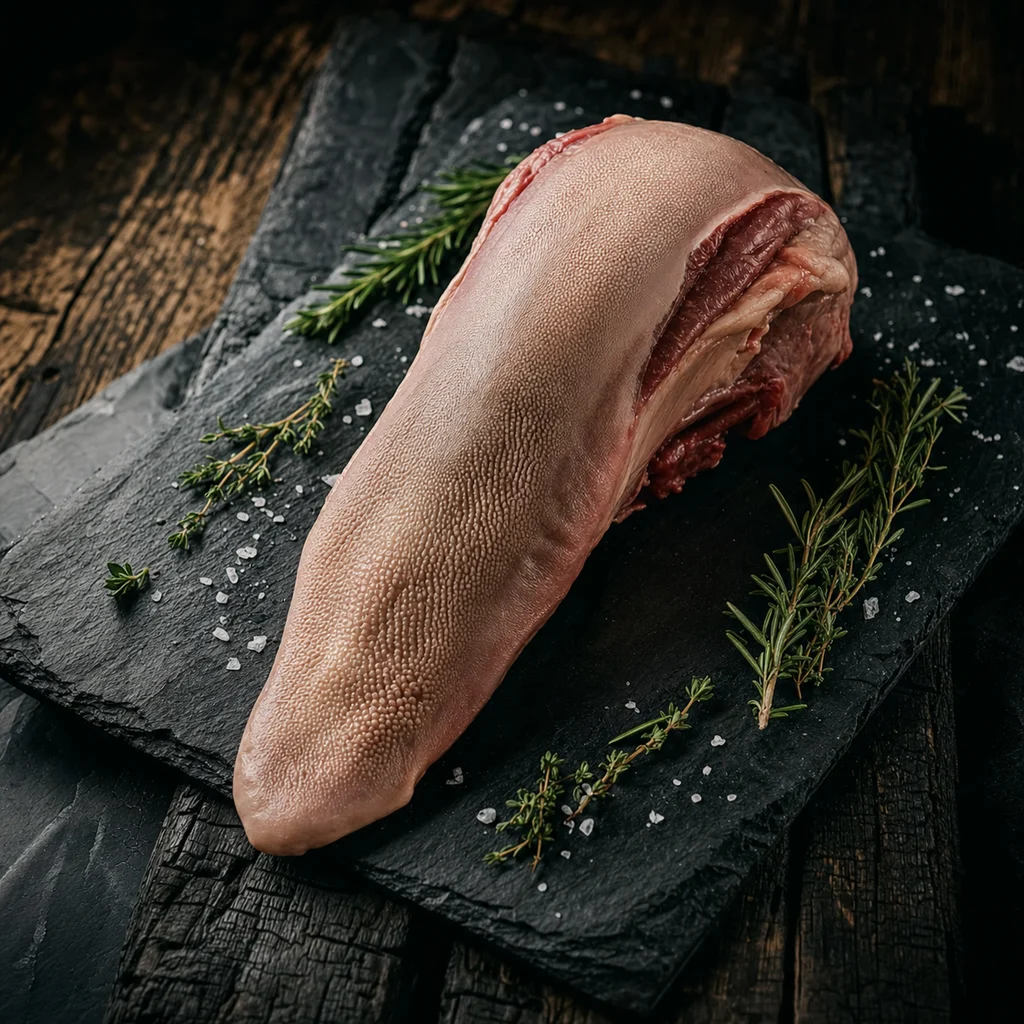
About this cut
An undervalued gem of the 'nose-to-tail' philosophy, beef tongue is prized by chefs for its luxuriously velvet texture and intense beefy depth. Despite being classified as offal, its high intramuscular fat content and fine muscle grain provide a melt-in-the-mouth experience that surpasses many primary cuts. When prepared correctly, it balances a rich, savory profile with a delicate, elegant mouthfeel that is truly unique.
Taste-DNA
0
Marbling
0
Tenderness
0
Intensity
0
Fat
0
Price
Origin
The tongue is a highly active group of four main muscles used constantly for grazing, resulting in a dense concentration of connective tissue and flavor-carrying fats. This constant movement necessitates long, slow cooking to transform the collagen into silky gelatin, unlocking its legendary tenderness.
Preparation
braising slow roasting poaching pressure cooking
Cooking Guide
Begin by brining or poaching the tongue in a court-bouillon for 3 to 4 hours until it is fork-tender; a pressure cooker can reduce this time significantly. Crucially, the outer skin must be peeled away while the meat is still warm to ensure a clean presentation and texture. For a modern finish, slice the chilled tongue and sear the medallions in foaming butter to create a crisp Maillard crust that contrasts with the tender interior. Always rest the meat before the final service to retain its succulent juices.
Core Temperatures
Portions per Person
The fatty, gelatinous richness of the tongue requires a pairing with high acidity or structural tannins; a bold Cabernet Sauvignon or a sharp, traditional horseradish cream provides the perfect counterpoint.
Sommelier Tip